Running successful ideation workshops: Preparation
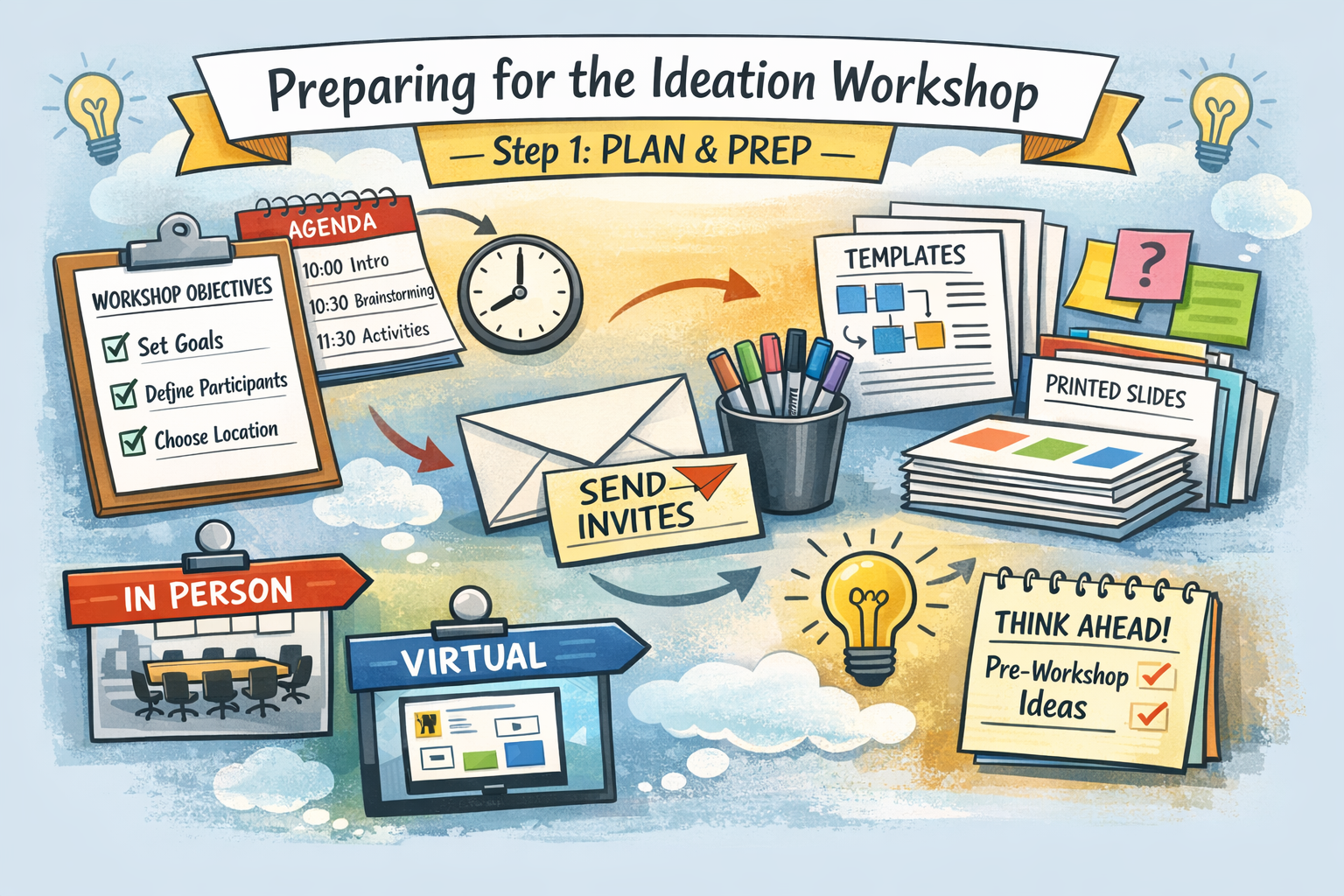
In this series we are going to outline some of the elements that we’ve found useful when working with teams of various sizes, skillsets and backgrounds. Today we are going to have a look at how best to prepare for the ideation workshop and how to get teams thinking about the subject before they attend the session.
The stages of an ideation workshop
When approaching the planning and running of an ideation workshop I work around four key stages:
Prepare – this stage includes all the planning, pre-work and set-up that takes place before the workshop
Prime – this stage is all about how we prime or prepare workshop participants during the workshop to be ready to create the best ideas possible
Create – this stage is the process of creating the ideas during the workshop
Close – this stage includes reflection on the ideas created and identification of next steps during the workshop
Today we’re going to be looking at the first stage: prepare
Step 1 – the basics
Before you start thinking about your anything else it’s important that you agree on the objective of the workshop and what you want to get out of it. Make sure the whole team is aligned on this so there are no misunderstandings. Once this is set you can also define who you will need in your workshop in order for you to achieve you objective and where you will be holding it e.g. is it going to be virtual or is it going to be in person.
Step 2 – the agenda
Great, so now you know what you want to achieve and who will be coming. It’s time to start to think about the activities you want to include and the timings for each one. At Infosys Consulting we have a workshop toolkit we have created with templates for common workshop activities. This is where I always start when building my agenda but there are lots and lots of great resources out there to help with common workshop activities. Anyone who hasn’t read it should definenely check out the book ‘Gamestorming: A Playbook for Innovators, Rulebreakers, and Changemakers’. It contains lots of theory about workshops and some great exercises for you to use.
Step 3 – Materials
Agenda prepped, now let’s figure out what materials we need to run it. It’s important that we know if it’s going to be a virtual workshop or in-person at this stage so we know what to prepare.
For an in-person workshop we need to think about:
· Printed exercise templates
· Printed agendas
· Slides or print outs to provide instructions for each exercise
· Post-it notes
· Pens
· Spare sheets of paper
· White or blue tack
· Name badges
· A timer
· Refreshments
· Booking a room
For a virtual workshop we need to think about:
· Digital exercise templates in a tool such as Miro or Mural
· Digital copies of the agenda
· Digital materials to guide people through the instructions for each task
Step 4 – the invites
The earlier you can get your invites out the better. I also find it’s great to provide people with the agenda and if it’s a virtual workshop a link to the workshop board if you are using a tool such as Miro or Mural. This way people know exactly what to expect.
Another very useful thing to do at this stage is to get people thinking about the content of the workshop before they attend. This doesn’t need to be a pre-workshop exercise, it can be something as simple as asking them to think about all the pain pints they have heard from their customers or the best airline booking experiences they have had. Anything that gets people thinking about the workshop subject will put them in a better prepared position when they start the workshop itself.
The last thing I also do a day or two before my workshop is to send a quick reminder to everyone. This helps you weed out anyone who might no longer be able to attend and plan accordingly.
Wrapping up
That’s everything! You’ve got everything planned and prepared. You’ve got everyone invited. Now all you need to do is facilitate you workshop. Next time we’re going to talk about how we bet prime are audience to come up with better ideas during the workshop itself.
