Making Design Work in an Agile Team
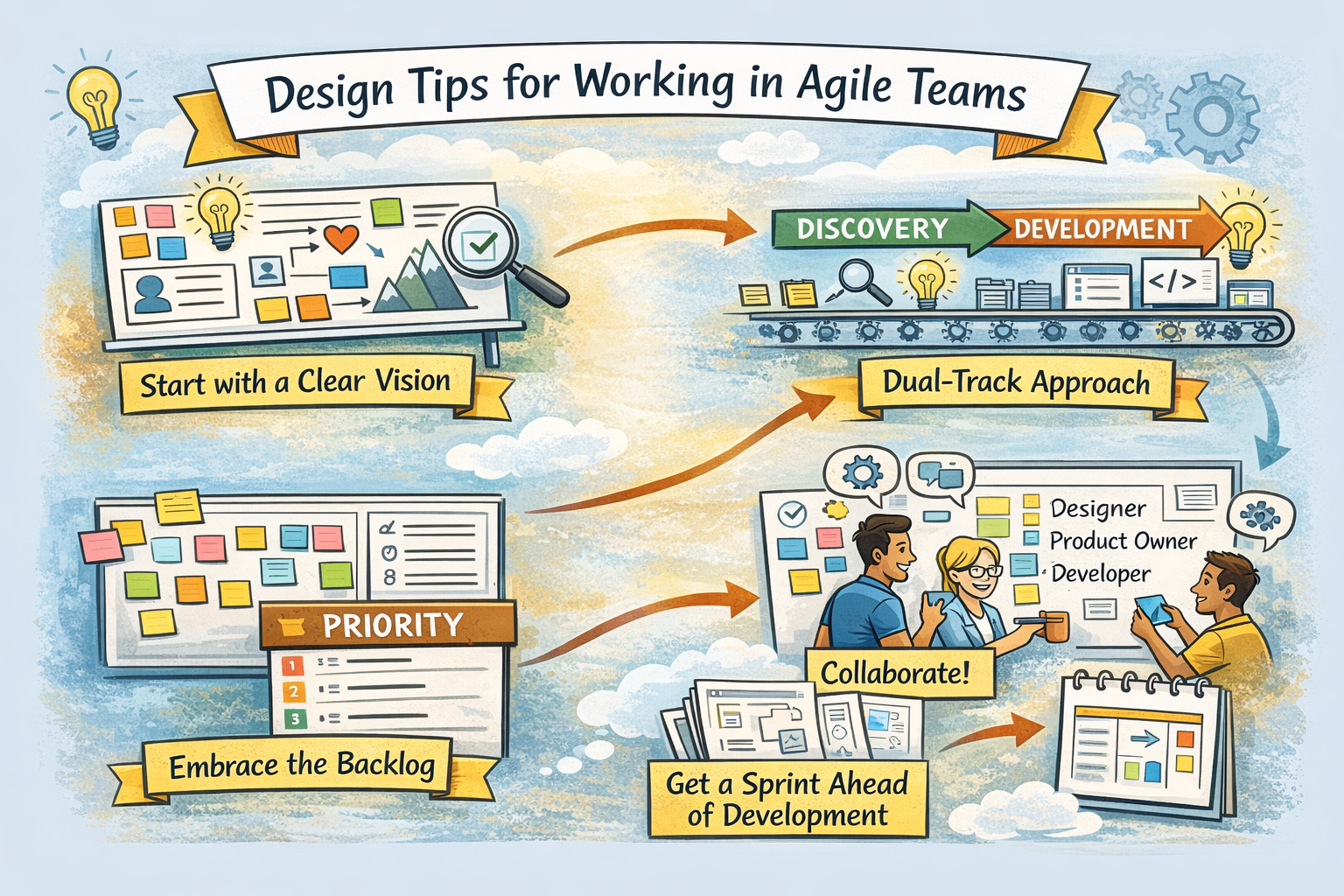
Being asked to work within an Agile process is something that can cause a lot of debate and contention within design teams. It can be hard to design things in chunks as the more you find out the more you need to go back and change things you have done before, it can be hard to break some tasks down neatly into two or three week chunks and sprint ceremonies can take valuable time away from important tasks. So what are some of the lessons I have learned from working as a designer and design team manager within agile environments?
The importance of a clear vision
One of the biggest challenges I have come across is caused by starting the design and development of a product or feature at the same time. This results in a huge amount of pressure on the design team to start producing development ready designs before they have had any chance to figure out what it is that should be being developed. It’s vitally important not to rush into development. Take the time to understand your users, their needs, pains and motivations and to create a vision of how your product or feature should work. Set this as your ‘sprint 0’ that’s done before anyone starts to think about developing anything.
This might be an exercise led by the design team but it’s not one that they should be doing alone. The whole team should participate in planning out what questions should be explored in the research, observing the research activities, and ideating around potential solutions.
All design tasks are not created equal
I have often seen teams struggle to tackle big problems or topics because they can’t be designed and developed within a single sprint. They need much more time and attention. This is where a dual track approach comes in. One track focuses on discovery tasks while the other development. This can be a great way to ensure you have enough time to do all the research, thinking and iteration required to crack your big thorny challenges.
Embrace the backlog
While as designers we all like the freedom to follow our nose and structure our time as we see fit, if there is a lack of visibility of what the design team is doing this can lead to both friction in the team and a lack of buy in to whatever is produced. A way to solve this to embrace the backlog. While it might seem like a pain to have everything planned out in ‘tickets’ it will help the team plan efficiently and make sure everything the design team does is visible. Try to think about how you can create one ticket that gets passed all the whole development process from design to development.
The whole team are problem solvers
Another great way to ensure the whole team are bought into design decisions is to make sure you are collaborating as a team. Bring product owners, scrum masters, developers and business analysts into the design process. Have collaborative ideations sessions, pull people into design discussions and make use of all the clever people you have at your disposal. This is also true for research activities. There is nothing more eye opening for someone working on a product than seeing someone trying to use it.
Working a sprint or two ahead
We’ve mentioned taking a dual track approach to discovery and development activities. It is often also important for the design team to get a head start on their detailed design activities too. To avoid developers sitting around at the start of a sprint and waiting on the design team to finish off designs try to work a sprint or two ahead. This helps ensure the design team have time to iterate and test their designs before they go into the development process.
Get it up on a wall
We are great as designers at creating documents that explain our thinking. We create personas, mock-ups, journey maps and blueprints. It’s important that we make sure these are visible to whole team. Stick them up on a wall (or a virtual wall like in Miro or Mural) and make sure you bring them up each time you are discussing the product. Scribble notes on them, make it clear when things change and make sure everyone knows about them. This will help the whole team feel a part of the process and make sure everyone is on the same page.
That’s it! There are lots more tips and tricks I have learned but it’s a great to share a few!
